

Table of Contents
Share this article
This post is 100% human written with no help from AI. *Diagonal Business Verticals*
“Horizontal” products solve needs or problems for specific skill sets, agnostic of industry, whereas “Vertical” ones go deep into the nuances and workflows of a specific subject matter or industry.
The current belief of AI investors seems to be that ultra-specialized, niche, vertical software will be the saving grace that provides a barrier to entry now that AI can out-code humans. Recent venture investments reflect this trend, with many “AI for insert industry here” companies raising big rounds.
The hope is that the foundational AI companies won’t bother to get into such areas, and that the smaller upstarts won’t be able to compete with the tomes of tribal knowledge built up …
… but I’m not so sure, for a few reasons:
- To get better adoption of their tools in Enterprise, the foundational AI companies are already rolling out industry specific tools (like Claude legal) and hiring consultants (like Open AI).
- People are overestimating the barrier which industry knowledge provides.
- AI understands extremely industry specific knowledge now.
- Even if that knowledge is super-niche: once coded, it can now be copied or re-built super fast. This is the key point which will drive down margins and barriers. Financial markets, the industry I started in, has so much nuance in it. A limited number of people care or know what portfolio optimization is. But a) AI does and b) all it takes is a few smart people using AI to build the functionality in days. That’s different than 20, 10, 5 years ago.
- Note also that the entire concept of a vertical is a very human one. Verticals exist because humans can’t become expert in more than one field at a time. That isn’t true with AI, if expert is defined as human-level. Who knows how that’s going to affect how workflows work in the future.
I think what will occur is that vertical and horizontal tools blend into so-called “diagonal” workflows which extend super deep AND wide, meeting the precise, custom needs of users. This is the logical endpoint of an ecosystem where capabilities in both subject matters (verticals) and skill sets (horizontals) are commoditized.
What will remain at the margin is per-business model, per-organization, per-user needs as the last differentiators. Meeting these needs is likely to require a very local, personalized and hopefully human touch. This could represent a huge opportunity; two (I’m sure imperfect) analogies:
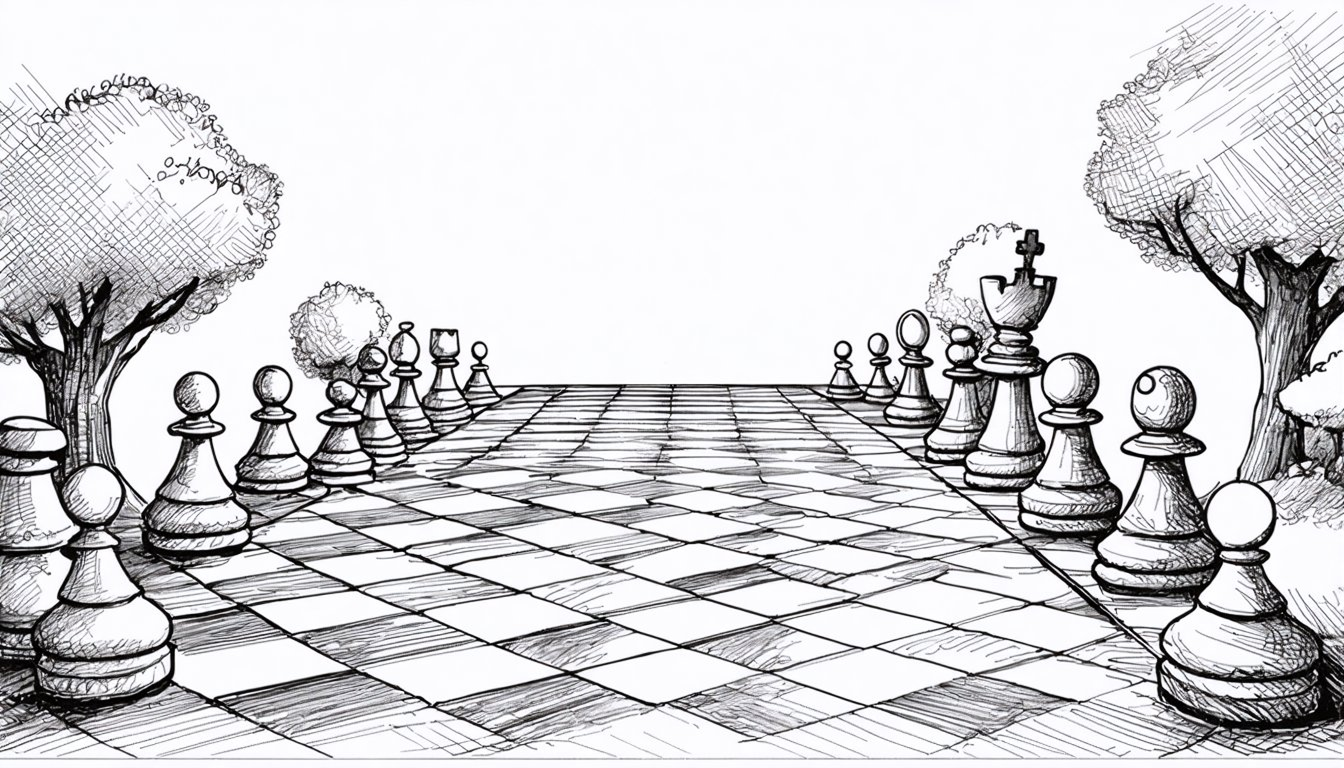
- On an oversized chessboard imagine the number of squares - and the combinations of paths after a few moves - a Queen can get to versus a rook that is constrained to its rank and file. Each of those combinations represents a unique strategy in business, life. (What’s the actual formula for that )
- Some people love luxury purses. But they cost a lot. What if you had a robot which knew how to sew purses given the raw materials. If you couldn’t afford the brand name purse, what would you do? You’d ask the robot to sew a similar one - but impart your personal touches and history and creativity upon it. Perhaps making it cooler than the brand name product in the first place.
Massive caveat: security, orchestration, monitoring, safety and guardrail concerns could and should override any debate of horizontal vs vertical vs diagonal. It could be that it’s simply more optimal to impose a degree of horizontalness or verticalness upon models for security’s sake.
.avif)